Flash Photography Techniques
~ Intro page ~ Natural looking flash

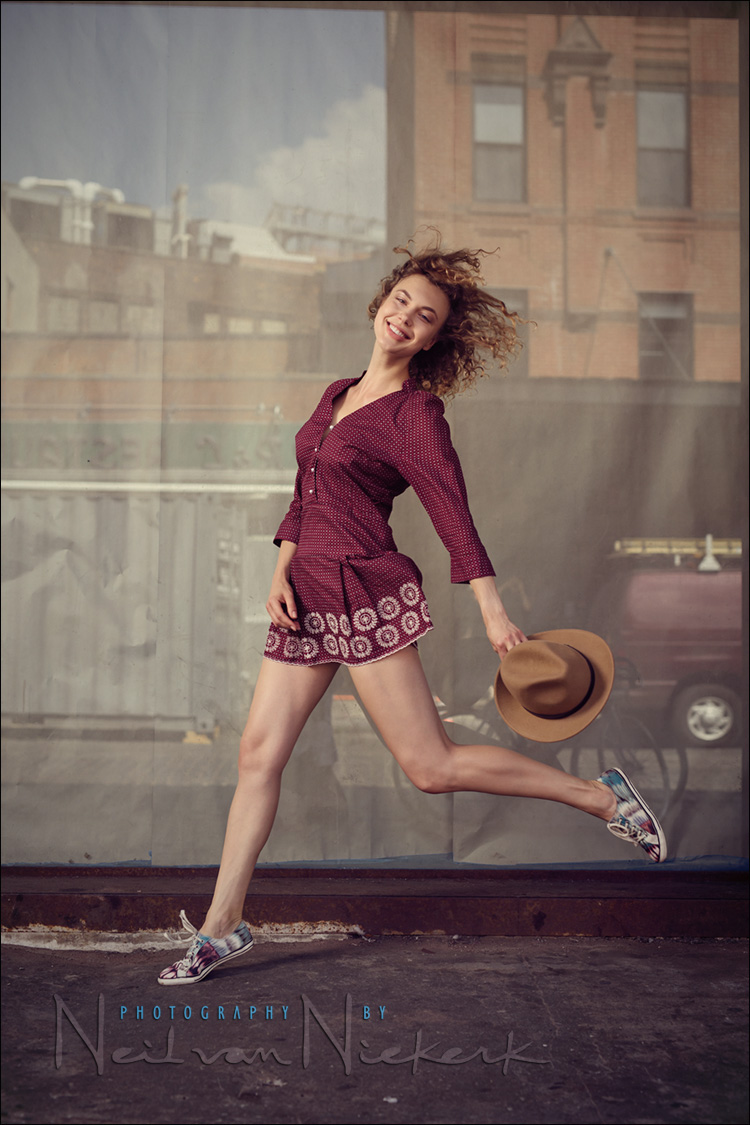
Flash photography techniques and tips
As photographers we’re always looking for perfect light.
And yet, the quality of available light isn’t always ideal. It is rarely perfect.
But I feel that in using flash wisely, I’m able to enhance or over-ride the available light. With careful use of flash, I am more in control of light, and hence the way my photos will look – than if I had just accepted the existing ambient light.
Instead of waiting for perfect light, I use what I have …
and add flash to make the best of the situation.
The next series of articles is a primer for anyone who is struggling with flash photography, or worse yet, intimidated by it. Hopefully, as you go through the articles, things will fall into place.
We’ll be aiming for those “aha!” moments.
A few things we need to get out of the way first
- These pages were originally written to help other photographers who struggle with on-camera flash. But they were also written as a reaction against the snobbery of the purists who insist on using available light only – even when it looks terrible.
- Many of the photos on the next few pages are from weddings. However, don’t feel that this only relates to weddings. The techniques here are applicable to almost any other field of photography. Since the majority of my work is as a wedding photographer in New Jersey, it was often easier for me to find examples from that.
- The techniques here are, for the most part, system non-specific.
I own and use both Nikon and Canon systems. Over the years I’ve used a number of Canon and Nikon and Fuji cameras. These articles are written with the intent that they apply to pretty much any camera and flash system. The finer specifics can always be found by delving deeper into the manuals – but on a certain level, these techniques apply to every camera and flash.
- The photos here were all taken with digital cameras. They are immensely helpful tools in learning about the craft of photography. However, the techniques here are valid for film cameras too.
- Also, the images here had little Photoshop work done to them. But I did correct the white balance, and fine-tune exposure and contrast for these photos, as part of my general raw workflow. I wanted to show what was possible with the camera and flash and lens; not show off Photoshop skills.
- I always use my camera in manual exposure mode for very specific reasons. With flash however, I alternate between TTL flash (if either myself or the subject moves around), or manual flash, (if the subject is static in relation to the strobe.) More about that in the following articles.
- And finally, when I talk about ‘on-camera flash’, I am not talking about the pop-up flash, but a proper dedicated hot-shoe mounted speedlight / flashgun.
- Also be sure to read the linked articles in every Tangents blog post. I continually add new material. To stay up to date with new entries as they are published, add the Tangents blog to your RSS feed, or you can sign up for the monthly newsletter.
- For those in a rush to get to the more complex stuff – Off-Camera Flash photography techniques and tips.
 let’s get started: Making flash not look like flash

Help support this website
If you find these articles of value, please support this website by using these Amazon and B&H affiliate links to order your photo gear.
I also offer photography workshops and tutoring sessions. There are also video tutorials, which are online workshops on photography.
Join us on the Tangents forum for further discussions, and stay informed of new articles via the monthly newsletter.
Neil vN
Books by Neil van Niekerk
I really like the work you have done.Your site is well written and easy to follow as well as covering a lot. Thanks
Hi Neil.
your site and fluid explanation of flash photography is staggering! Ive always struggled with flash but since finding your site I must say it makes you think to yourself… why diden’t I THINK!!. your explanation of manual flash and what you need to remember i.e. the four things that will control the flash exposure, power. apature. iso. distance. gave me a word that I will always remember, the first letter from each word spells P.A.I.D and I would think if everyone followed your lead, and teachings they would be paid with outstanding pictures.
many thanks phil.
Hello Neil,
I am pretty new into photography and I am so obsessed with photography, my aim is to be able to do portraiture and weddings. I found your site and I feel like you have just brought me up into a new world of photography. You are so precise with your explaiation. I have spent all sunday reading your article from page to pages and I had bought 3 of your books and can’t wait to get them.
I currently have Canon 50D with 70-200mm/2.8 IS and 24-105mm/4L IS
Thank for sharing your knowledge with us and looking forward to learn more from you and other photographers on your site.
Greatly appreciated.
Sid from (Australia)
Neil, just received your book “On Camera Flash Techniques” and really enjoyed the material presented. Kudos!
Carl Harsch
Hey Neil. I picked up your On Camera Flash Techniques book and all I have to say is It’s about damn time someone gave all the ins and outs of flash photography. I learned everything I know by myself but I know that there are tons of photographers out there who will treat this thing like the bible!
Amazing work. Now I am REALLY bummed that I missed you when you came to Western New York last year… Next time don’t have a workshop on my wife’s birthday okay?
Take care!
~Michael Alan Bielat
Hi Neil,
Just amazing! Your step by step explanation with the pictures teaches us how to take good pictures. I have gone thru your book several times and every time I learn something new. Just perfect.
Thanks.
Scott
Thank you very much for sharing your interesting views. Your extremely clear explanation on the difference between using TTL and manual flash has triggered me to buy your book via amazon. The book has not arrived yet, but in the meantime I keep busy picking up knowledge from your website. Hopefully after reading your book I will be able to adapt to available light and use flash light in a much better way. I want to get rid of the ugly shadows I currently have behind my subjects (even in bounce mode and with diffuser). That is why I searched for interesting tips on flash photography in the first place.
Regards, Karla
You’re still getting flash shadows because of that diffuser cup. It is throwing light forward from your camera’s point of view as if it is a small light source. Jump to the article on the black foamie thing in the meantime. It will explain how to get photos without a hard flash shadow when working indoors with an on-camera flash.
Having shot a lot with just the pop-up flash and it sounds like something Karla was going through, I came across a Pop-up bounce which which works great indoors and packs completely flat, they make it for Nikon, Canon and Sony DSLR cameras and is really durable. I can just throw it in my pocket and pop it on the camera with ease. It’s called the Zeh Bounce and I found it at . It is normally $10 and I actually got it discounted through the NAPP website, of which I am a member. For $10 though it works great. Worth a look.
Neil,
First off, I love your work. I think you should do more podcast, I think it would save you alot of time and and you have a great voice.
I just in the last year vamped up my skills and gear and am using the 5d Mark II and just last week I bought the 1d Mark III. I like them both alot while recognizing my frustrations with each. I would love to read more about why you primarily shoot Nikon now and what are some of your biggest frustrations with the 1d Mark III?
Cheers
I try to keep the material on this site as system-agnostic as possible, so I never really posted any Nikon vs Canon comparisons. But here is a discussion on why I switched my dominant system to Nikon. I still keep a small Canon system, mainly for the workshops and to remain familiar with the Canon flash system.
I found your explanation of flash photography very interesting. Over the years I have dabbled with light mainly in the black and white field and film. Now I can afford a better camera (Canon EOS 5 Mk2) and IS lenses, L series flash is not something I use very often, but I am willing to learn and will purchase your book through Amazon.
Great article; it gave me an insight on how to operate my CanonEOS 7D and the 580EX ll together.
I had a lot of problems on Christmas night.
Mike
I am just getting started to digital photography and had bought a Nikon D3100 to start with. I am currently shopping for a flash for my camera and I know I can’t go wrong if I purchase one of Nikon’s SB flash series, which are quite pricey in my opinion. Would you recommend a non-Nikon flash that will do a decent job for an average amateur photographer like me that will not cost an arm and a leg?
Sam .. I would suggest getting one of the top Nikon speedlights for specific reasons, even if they seem expensive compared to the camera. Between the Nikon SB-900 and SB-700, I think the Nikon SB-700 would suit you best, and offer a lot of flexibility and features as you grow as a photographer.
Here is the link to B&H for the Nikon SB-700 speedlight.
Thanks for having your e-book available through barnes and noble. Just bought it on my nook color after spending an hour pouring over your website in a coffee shop! This is really going to belp me i think :)
Charles.
I just want to express my REPEATED gratitude…I from time to time “google” questions and I always tend to find myself back here. Not only do I find the answers I’m looking for, I find the most simple explanations and I don’t feel like a complete idiot!! I consider myself a professional photographer but at times, on different discussion boards I feel talked down to and I question my abilities. I don’t ever feel that way when I read your explanations. Again- THANK YOU!
Neil, great explanation. I enjoy all of your creative posts and thanks for coming to AD in Cincinnati earlier this month. I’ve already incorporated into my workflow many of the things you demonstrated at AD.
Neil,
Thank you very much for taking the time to pass on this knowledge! This is an invaluable resource for anyone starting to learn flash photography.
Denzil
I found your explanation of flash photography very interesting. Over the years I have dabbled with light mainly in the black and white field and film.
Hi Neal,
I had my NikonSB700 delivered today and it is my first flash gun. Looking around the internet for tutorials I happen to come across your website. I intend to read all your articles and hopefully overcome my fear of using flash. I am a beginner and your website is very informative indeed.
Thanks,
Basanta
I’ve read your book on On Camera Flash and found it extremely useful – in fact I’ve just recommended it to a friend.
Hi Neil,
Dankie vir al die inspirasie. Jy is net eenvoudig ‘n guru wat flash betref! Dankie vir jou alles wat jy deel.
Karen
Hi Neil
I’ve read both ur books – still not confident shooting in manual… Much prefer iTTL..
I shoot with a D300 and have heard that in terms of spending money on a hobby I should start with education, then glass, then flash/light modifiers and finally a camera body.
Would you agree with that?
I’m holding off on the D800 – however I think I need a more powerful flash than the sb-600 so was thinking of the SB-910 or the Nissin Di866 – any thought on what would be better?
Thanks
M
Take a look at the Phottix Mitros+ line and Odin TCU commanders and wireless transceivers. They are excellent and simialr in quality to the big expensive top of the line Canon/Nikon flashes like the 600RT and the SB910.
Youngnuo 560-IV with the TX22 transmitter for group control… believe me YOU WILL FALL IN LOVE with that system.
Thans Neil for all you have done…..for amateurs and professionals ……
The writeups are so simple, informative which has helped a lot of us to understand what photography is all about. In fact reading you post has started giving me some sense on what those controls are on my camera. Reading the comments, I assume it may not be a problem sharing pic with you and asking some suggestions.
Neil, the information I found on your blog is what I have been looking for quite some time and haven’t found until now. I have been another victim of the lack of knowledge about proper flash use for several years. Unhappy with the inconsistency of my photography. Unable to figure out what I was doing wrong, and worst yet, not having any ideas on how to improve it. Looking for diffusers I came across one of your post about the Black Foamie Thing and realize pretty much everything around us could be used as a diffuser. The bounced flash technique is awesome. I’ve done it in the past, but wrong of course.
Thank you very much for sharing your knowledge.
Neil, you are really fantastic, your technics n your craft really fantastic. Thanks.
Hi Neil,
Love your books! Just one question, can i mix TTL with manual strobes e.g. For the hair light? Does this make any sence? Thanks for your help.
You can mix TTL and manual.
I haven’t written much about the topic, but there is at least this one article: mixing on-camera TTL flash with manual off-camera flash. It doesn’t quite directly answer your question, but yes, you can mix TTL and manual flash.
However, the hair light doesn’t make sense as TTL flash. That would have to be manual flash, since rim-light and hair-light can’t really be metered for by your camera’s TTL system. (I hope that makes sense.)
Hi Neil, just watched you on Share Inspire Create SIC with Brent and Johny. Great podcast with lots of good info. Went to amazon and ordered a couple of your most recent books, looking forward to them. I have turned down portrait jobs due to no confidence, once I read the books I think I might be ready. Thanks for the inspiration. Great shots in NYC!
Thanks
It’s been a great year in my photography learning since I found your site and books.
It takes a lot of practice, trial and error in order to take the most from your teachings. I make a lot of mistakes but now thanks to your teachings I know where my mistakes are and how to fix them.
Thank you very much for all of your shared knowledge.
Mr. Neil, I wish you a merry christmas and happy 2016
I just wanted to let you know how useful your website has been to me. I’ve alway been leery of flash because it seemed so complicated with lighting set ups, multiple flashes, reflectors, remote triggers etc. Seeing how effectively you use a single on camera flash has given me new motivation to keep moving forward. Thanks for freely giving this information to the masses!
Hi Mr Neil,
Thanks you for sharing great explanation.
In the sample photo above, (where the girl was running with reflection backdrop) I can’t find the reflection of photographer. How is it done?
Is it post processing or careful calculation of angle or careful positioning of the model ?
Thanks
My reflection is hidden because I am standing at a slight angle to the glass window and her position.
Hi NEIL
what size did you cut the black foam for your flash, have just found your website i think i am going to learn a lot from it
The Black Foamie Thing isn’t a specific size. It’s about 6×8 inches or 5×7 inches. I also roll it down as necessary – I just want that “lip” there to block the flash directly falling on my subject.
Here’s more info: The Black Foamie Thing.
I’m a strobist as well, and try to use flash diffused through an octabox as needed. It enables me to balance the light and make it more even on the subject especially during evening hours.
Late to the game. Starting photography at 57+. My daughter, who is a photographer gave me a Canon 20D several months ago (Dad needs a hobby). I bought a used Speed Lite. I read bits and pieces on net, much of which was conflicting opinions, but this is so step through and giving the bigger picture than what I have found.
This is better than a book I bought that got me at least started. I always enjoy sharing my little bit of work knowledge with people in my field, and I appreciate it when others are willing to do the same, and so would like to support you by doing the video. However, I have no Apple stuff to download it to except a very old 1st generation I Pad that I’m not sure how up to speed it would be.
Thanks again. For your good work and good service to your fellow photographers.
This question may have been asked before so if so here it is again. I have used SLR & DSLR cameras since the mid 1980’s. Only in recent months have I developed the desire to delve into the depths of the actual mechanics of photography. With that said, which one of your books will cover off camera flash photography in depth and not just for portrait and/or wedding photography? Examples such as fill flash, general indoor flash, special event flash at distances, effects of bouncing flash, etc. I use Nikon equipment and have 2 D70s and 1 D7200 bodies and a SB-800 flash unit. I use mainly Nikon lenses. The lenses are (18-200mm f/3.5-5.6; 18-300mm f/3.5-5.6; rarely used kit lenses 18-70mm f/3.5-4.5G; 55-200mm f/4.5-6.0G; plus a Sigma 105mm f//2.8 EX DG Macro OS lens. Many thanks for your suggestion(s).
Hello Neil, I am a 71 year old retired ambulance paramedic and a keen photographer. I own a Canon EOS 70D camera, a Canon EFS 18-200mm lens with a Polarising Filter and Lens Hood. I also own a Canon EFS 60mm Macro Lens, USM and a Canon EFS 10-18mm lens. I also have a 600EX-RT Speedlite Flash Gun. My main interests are Landscapes, Emergency Vehicles and Portraits. The latter is mainly of my grown up kids and grand kids, who are growing up too fast . Is there any place on here that I can post my photos for your comment please?
Hi there Michael — the easiest might be to post it in the Tangents Facebook group.
There’s an entire community there that shares photos and ideas.